Cooking-Line Exteriors
Accessible fronts, sides, backsplashes, control surrounds, handles, legs, and lower ledges on ranges, fryers, griddles, ovens, and similar equipment.
Serving Tacoma, Washington & surrounding areas
Open 24/7
Equipment cleaning · Lakewood
Detailed commercial kitchen cleaning planned around your equipment, operating hours, and food preparation schedule.
Operational equipment care
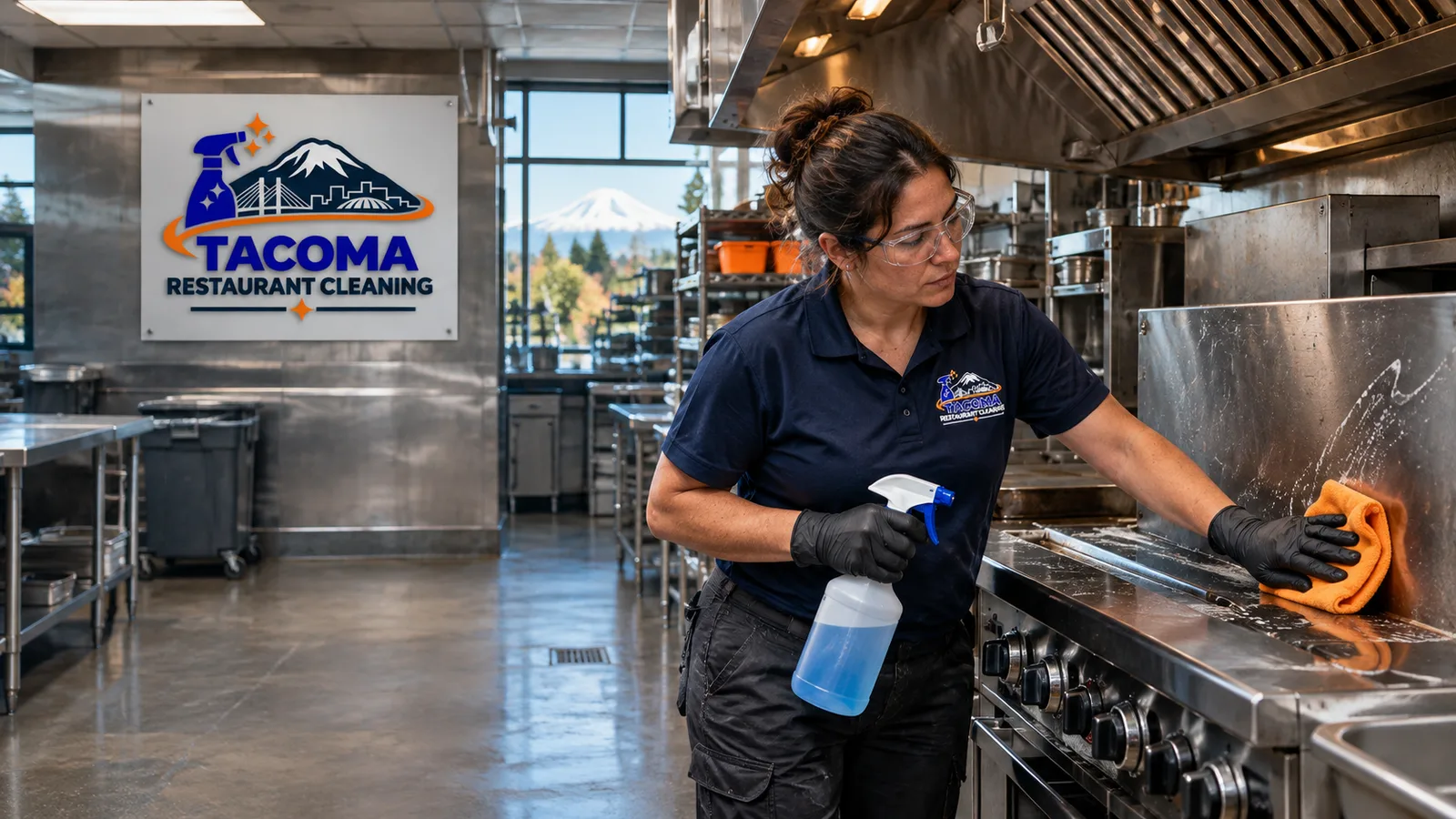
Restaurant Equipment Cleaning Lakewood should address the grease, carbon, food residue, and soils that routine shift cleaning can leave behind. Tacoma Restaurant Cleaning cleans accessible equipment surfaces and the difficult areas around them, with a written scope based on the kitchen's layout, equipment types, condition, and operating schedule.
Our restaurant specialists serving Tacoma work with commercial food operations that need practical scheduling and careful attention to work areas. For Lakewood kitchens near the commercial corridors around Lakewood Towne Center or along Bridgeport Way, that may mean arranging work outside service hours so staff can close normally and return to an orderly kitchen.
Before work starts, we identify the equipment included, discuss access and shutdown requirements, and separate movable items from units that must remain in place. This keeps the cleaning plan realistic. It also helps managers understand which exterior panels, undersides, casters, adjacent walls, and floor edges are included.
Equipment cleaning scope
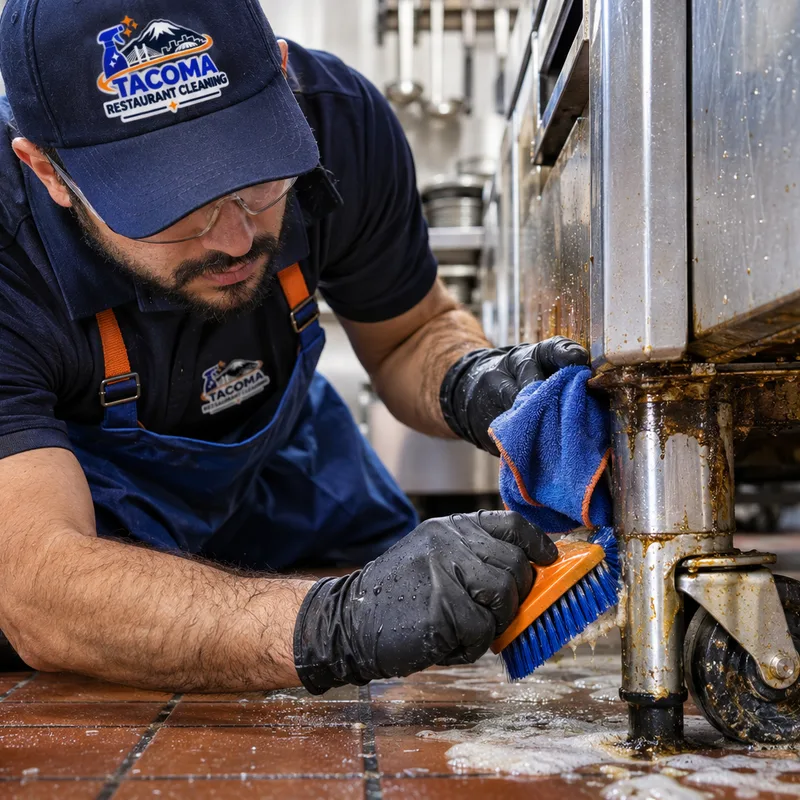
The scope can include cooking-line exteriors, stainless steel prep equipment, reach-in units, shelving, worktables, sinks, small equipment stands, and accessible surfaces around fixed appliances. Common detail points include handles, control surrounds, seams, legs, casters, splash zones, undersides, and the narrow spaces where grease and crumbs collect.
Each item is assessed before cleaning. Stainless steel requires methods that protect its grain and finish. Painted panels, plastic controls, rubber gaskets, and printed markings may need different products and contact methods. Heavy carbon deposits also call for a different process than fresh grease. Product selection should follow the soil and surface rather than relying on one chemical for the whole line.
This service does not assume that every machine can be opened or moved. Internal electrical, gas, refrigeration, and manufacturer-restricted components require suitable technicians and approved procedures. We define accessible cleaning areas before starting and flag conditions that fall outside the agreed scope.
Cleaning zones
The final scope follows equipment type, surface condition, soil level, and safe access.
Accessible fronts, sides, backsplashes, control surrounds, handles, legs, and lower ledges on ranges, fryers, griddles, ovens, and similar equipment.
Exterior surfaces, handles, gaskets when included, tops, sides, and accessible areas around reach-ins, prep refrigerators, and other cold-holding units.
Stainless steel tables, shelving, sinks, equipment stands, splash zones, and nearby surfaces where food residue and mineral deposits accumulate.
Accessible floor edges, wall junctions, spaces between units, casters, feet, and undersides are cleaned when safe access is available.
Approved exterior surfaces on mixers, slicers, countertop appliances, and other movable items can be included after disconnection and preparation are agreed upon.
Managers can prioritize a problem line, selected appliances, or accumulated soil rather than scheduling the same scope for every item.
How scheduling works
A defined sequence coordinates access, equipment preparation, detailed cleaning, and the final review.
We discuss the equipment list, service hours, access, loading arrangements, security requirements, and the time available before the next shift. Lakewood restaurants with evening service may need overnight or closed-day scheduling.
The scope identifies the equipment and accessible surfaces to be cleaned, along with exclusions, shutdown needs, and any preparation expected from kitchen staff.
Food, utensils, clean wares, and loose supplies must be removed or protected. Equipment is shut down, cooled, isolated, or moved only when the agreed procedure and safe access permit it.
Suitable products are given the necessary dwell time, then soil is loosened with surface-appropriate tools. Crews work through panels, seams, handles, legs, casters, and adjacent accessible areas.
Residue is removed using the method appropriate for the surface and location. The completed scope is reviewed, and any inaccessible area, damage, or maintenance concern observed during cleaning is reported.
After-hours coordination
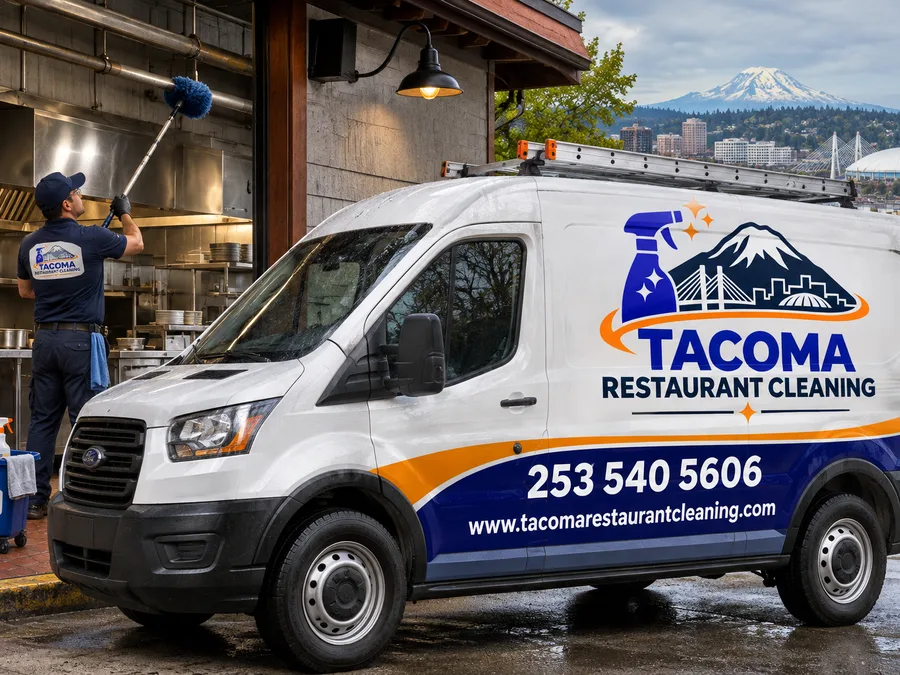
A useful cleaning plan fits the restaurant's real operating pattern. Full-service kitchens, quick-service operations, bakeries, bars, commissary spaces, and institutional food operations do not have the same access windows. The equipment may also need different cooldown times. We account for those constraints when setting the sequence.
Lakewood's proximity to Joint Base Lewis-McChord and Interstate 5 supports food businesses with early, late, or variable demand. A rigid daytime appointment may not work for those operations. The practical approach is to identify when the cooking line can be safely shut down, how much time is available, and when equipment must be ready for staff.
Pacific Northwest wet weather also affects floor traffic and loading access during much of the cooler season. Entry routes, hoses, cords, and wet-work controls should be planned before the crew arrives. Inside the kitchen, slip controls and separation from food preparation remain part of an orderly job.
Defined work boundaries
Equipment cleaning quotes should state what is being cleaned and how access affects the work. A vague promise to clean the kitchen can leave basic questions unanswered: Are the sides and backs accessible? Will staff disconnect countertop equipment? Can appliances move without disturbing gas, water, or electrical connections? Are interiors included, or only exterior and accessible components?
Condition matters as well. Fresh cooking grease usually responds differently than thick, polymerized buildup. Carbonized residue may require repeated product applications and mechanical agitation, while mineral deposits around sinks call for compatible chemistry. Existing corrosion, failed coatings, damaged gaskets, worn labels, and scratched stainless steel cannot be corrected through cleaning.
Tacoma Restaurant Cleaning builds the scope around observable conditions. Managers receive a practical plan for a one-time deep clean, selected-equipment service, or recurring attention. Frequency depends on cooking volume, menu, equipment design, housekeeping routines, and how quickly soil returns. The right interval is established from the kitchen's actual condition rather than a generic calendar.
Share your equipment list, operating hours, and priority areas to receive a practical scope built around your kitchen.
Call for a Free QuotePractical answers
Pricing is based on the number and type of equipment items, soil level, access, required labor, and the available work window. A lightly soiled prep table is different from a cooking line with carbonized grease and limited clearance. Photos and an equipment list help with initial planning, but the final scope should reflect the conditions and access at the Lakewood location.
Equipment cleaning is usually best scheduled when the affected work area is out of production and the appliances are shut down and cool. The exact timing depends on service hours, cooldown requirements, and whether staff need access to nearby prep or wash areas. Restaurants along busy Lakewood commercial corridors often arrange work after closing or on a planned low-use day.
Movement and disconnection must be agreed upon before the appointment. Restaurant staff or qualified trades may need to isolate gas, electricity, water, or refrigeration connections. Cleaning crews should not pull fixed appliances forward when doing so could strain utilities, damage flooring, or violate manufacturer requirements.
Interior cleaning is included only when it is named in the written scope and can be performed safely under the equipment manufacturer's requirements. Food, racks, pans, and stored products may need to be removed first. Sealed mechanical spaces, energized parts, refrigeration systems, and technician-only compartments are outside routine cleaning access.
The duration depends on the equipment count, buildup, access, and the depth of cleaning requested. A targeted group of accessible stainless steel items may fit within one work period, while a heavily soiled line can require a longer shutdown. We plan backward from the Lakewood operation's required reopening time and allow for cooldown, cleaning, inspection, and safe restart procedures.
The interval should follow cooking volume, grease production, equipment design, and the results of routine staff cleaning. Frying and high-heat cooking can create persistent deposits faster than cold preparation. After the initial service, the observed rate of soil return provides a better basis for recurring Restaurant Cleaning Lakewood than a fixed schedule applied to every operation.
Cleaning removes compatible surface soils but does not repair corrosion, scratches, failed finishes, heat damage, or permanent staining. Aggressive abrasion can worsen stainless steel and damage labels or coatings. Existing wear is identified where practical, and methods are selected to avoid treating physical damage as removable residue.
Plan your equipment scope
Tell Tacoma Restaurant Cleaning which equipment needs attention, when your kitchen can be available, and where buildup is causing concern. We will help define the accessible work, preparation needs, and scheduling plan before service begins.