Restaurant cleaning · Parkland

Restaurant Cleaning Services in Parkland

Dependable cleaning plans for commercial kitchens, dining rooms, restrooms, and high-traffic floors, scheduled around your operating hours.

✓Kitchen and guest areas ✓One-time or recurring scopes ✓Scheduled around operations
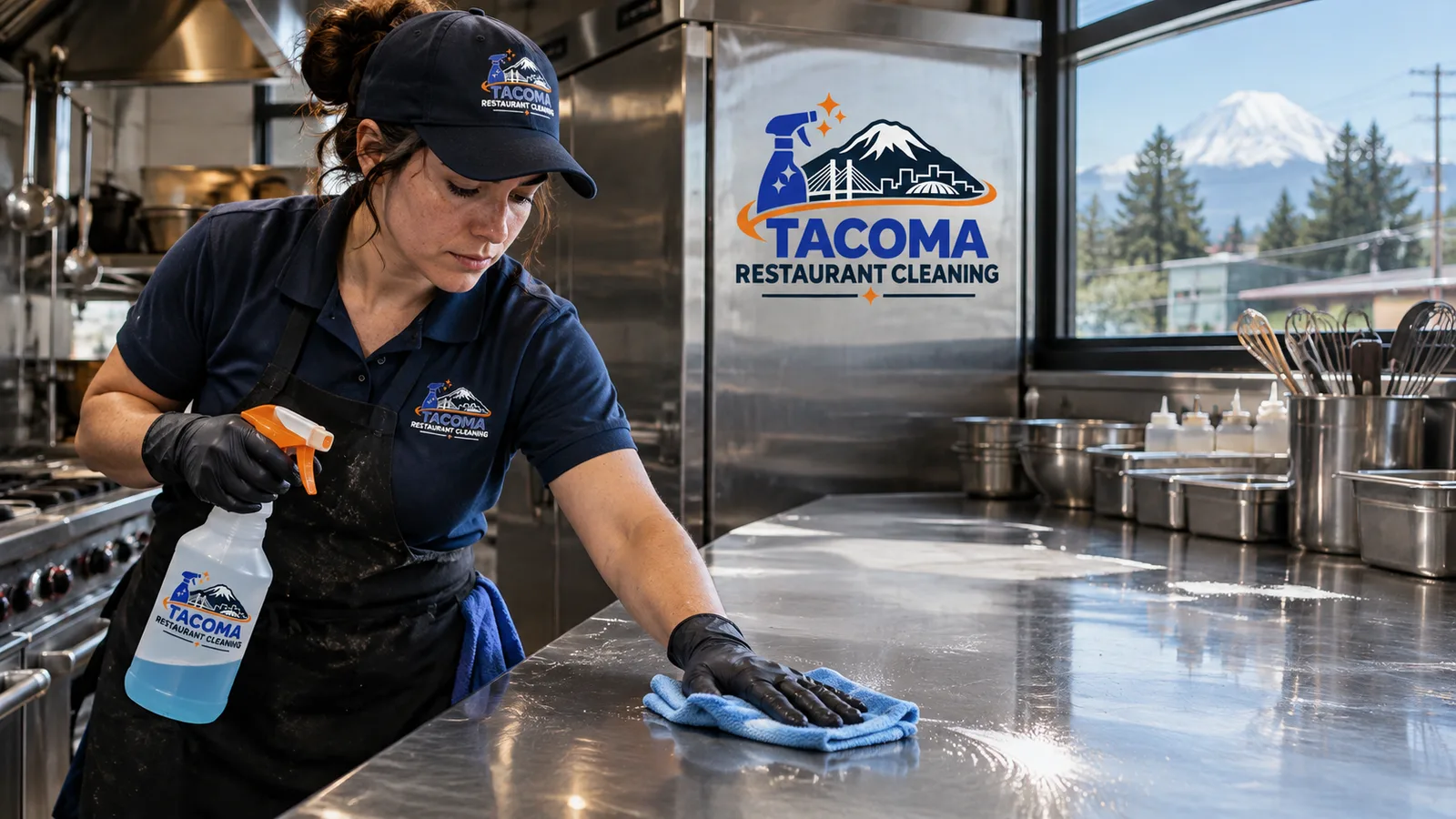
A restaurant cleaning professional sanitizing a polished commercial kitchen prep area after service in Parkland
Planned cleaning for the spaces your staff and guests rely on every day.

Operational restaurant care

A Cleaner Restaurant, Without Disrupting Service

Restaurant Cleaning Services Parkland should support the way your restaurant operates. Tacoma Restaurant Cleaning develops recurring or one-time scopes around your hours, kitchen layout, customer traffic, and highest-priority areas. The goal is consistent work that your opening crew can inspect easily.

Our cleaners address customer-facing spaces and back-of-house areas using methods suited to each surface. Floors need grease removal without leaving a slippery film. Food-contact surfaces require appropriate cleaning and sanitizing procedures. Restrooms, entry glass, tables, booths, and touchpoints need close attention because guests notice them immediately.

We are an experienced restaurant team in Tacoma, WA that coordinates Parkland work from our Tacoma base and sets clear expectations before the first visit. You receive an agreed scope, cleaning frequency, access plan, and a practical way to report changing needs. That structure helps managers avoid vague task lists and inconsistent results.

Cleaning zones

What Our Restaurant Cleaning in Parkland Can Cover

A defined scope coordinates front-of-house presentation with practical back-of-house cleaning.

✓

Commercial Kitchen Cleaning

Cleaning can cover prep surfaces, sinks, backsplashes, exterior equipment surfaces, shelving, washable walls, and accessible areas around cook lines. Tasks are defined by zone so routine work does not leave persistent trouble spots.

✓

Dining Rooms and Guest Areas

We clean tables, seating, partitions, ledges, entry glass, doors, and other visible touchpoints. The plan can account for booths, movable furniture, and the floor edges that quick closing routines often miss.

✓

Floor Care

Hard floors may need sweeping, vacuuming, degreasing, mopping, or machine scrubbing based on the surface and soil level. Carpeted areas can be vacuumed as part of recurring service, with deeper treatment scoped separately.

✓

Restrooms

Restroom work includes fixtures, mirrors, partitions, dispensers, touchpoints, floors, and odor-source cleaning. Supplies can be checked or replenished when they are provided on site and included in the scope.

✓

Waste and Closing Support

Interior bins can be emptied, liners replaced, and waste moved to the designated collection point. Closing support may also include resetting cleaned areas according to an agreed checklist.

✓

Detail Cleaning

Periodic work can target baseboards, corners, floor edges, lower wall areas, vents, and reachable surfaces that collect residue between routine visits. We identify these tasks separately so managers know what each visit includes.

Verifiable cleaning standards

Restaurant Cleaning Services Parkland Managers Can Verify

A useful cleaning plan is specific enough to inspect. We divide the restaurant into zones, list the tasks assigned to each zone, and distinguish routine cleaning from periodic detail work. This prevents misunderstandings about equipment interiors, high areas, exterior walkways, or other items that may require different timing and preparation.

Commercial kitchens need more than a general wipe-down. Degreasing removes oily soil before sanitizing can be effective. Sanitizers must be used at the product label's concentration and contact time, and food-contact surfaces may require a potable-water rinse depending on the label. Safety Data Sheets should remain available for workplace chemicals, and products must never be mixed unless their labels expressly permit it.

Washington restaurants operate under food-safety requirements administered through local health authorities. In Parkland, food establishments fall within the Tacoma-Pierce County Health Department's jurisdiction. Professional cleaning supports daily sanitation routines, but restaurant management remains responsible for its food-safety procedures, employee practices, and inspection readiness.

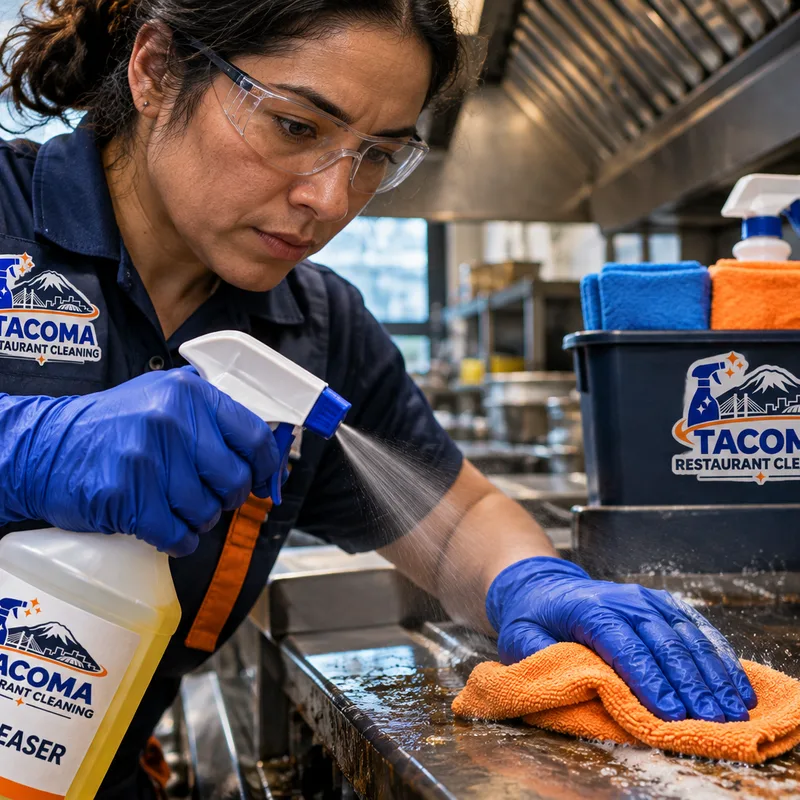
A close view of a cleaner applying degreaser to an accessible commercial kitchen surface, with labeled products and color-coded microfiber cloths visible
Products, dwell times, and tools should match the surface and soil.

How scheduling works

How We Build Your Cleaning Plan

A defined sequence aligns the scope, access, service window, and management review.

01

Walk Through the Restaurant

We review the dining room, kitchen, restrooms, storage areas, floors, entrances, and designated waste route. The walkthrough also identifies access restrictions, delicate finishes, heavy grease areas, and tasks your staff will continue to handle.

02

Set the Scope and Schedule

You receive a written task list organized by area and frequency. Service may be arranged after closing, before opening, or during another approved window, depending on access and the amount of work involved.

03

Prepare for the First Service

We confirm entry instructions, alarm procedures, water and power access, chemical storage expectations, and who can approve scope changes. Restaurant staff secure food, valuables, and restricted equipment before the crew arrives.

04

Clean in a Controlled Sequence

The crew works by zone, generally addressing higher and cleaner surfaces before floors and waste handling. Separate tools and cloths can be used for restrooms, dining areas, and kitchen zones to reduce cross-contamination risk.

05

Review and Adjust

Management can report missed details or changes in traffic, menus, layout, and operating hours. The checklist and frequency can then be revised rather than relying on informal instructions from shift to shift.

Request a Callback

Pricing factors

How Much Do Restaurant Cleaning Services Cost in Parkland?

Recurring restaurant cleaning in Parkland typically costs about $0.10 to $0.35 per square foot per visit, while small minimum-service visits may run roughly $150 to $350. Detailed kitchen degreasing or restorative floor work is commonly priced separately and may cost more.

Final pricing depends on square footage, visit frequency, grease buildup, floor type, restroom count, equipment access, operating window, and whether supplies are included. A walkthrough identifies the labor and periodic tasks required. The exact cost is confirmed after the on-site consultation and written scope.

A restaurant cleaner maintaining an entry floor and mat during wet South Puget Sound weather, with caution signage placed correctly

Local operating conditions

Parkland Conditions That Shape the Work

Parkland has restaurants along busy commercial routes as well as neighborhood establishments serving nearby residents and Pacific Lutheran University traffic. A location with quick table turnover may need more frequent attention to entries, restrooms, and dining-room floors than a lower-volume operation, even when both have similar square footage.

Rain is common across the South Puget Sound region for much of the year. Wet shoes track water and grit through entrances, which can dull hard floors and create slip concerns. Entry mat maintenance, prompt spot mopping, and correct wet-floor signage should be part of the plan when conditions require them.

Kitchen needs change too. Frying, high-volume grilling, and late closing hours can increase grease on floors and accessible surfaces. A restaurant with primarily cold preparation will have a different soil load. We base the frequency on actual use rather than assigning every Parkland restaurant the same checklist.

Defined service boundaries

Clear Boundaries for Safer, Better Results

Routine restaurant cleaning does not automatically include every specialized task. Exhaust hood and duct cleaning, pest control, hazardous-material cleanup, exterior pressure washing, and internal equipment servicing require separate scopes and may call for specialist providers. We identify boundaries before work starts so managers can assign each responsibility correctly.

Restaurant staff should cool and secure cooking equipment, store exposed food, and communicate any damaged surfaces or active leaks. Cleaning crews should never move guards, disconnect appliances, or enter restricted equipment without authorization. If a surface cannot tolerate a planned chemical or method, a small compatibility test or manufacturer guidance should come first.

Consistency also depends on access. Locked offices, occupied prep areas, stacked floor mats, or equipment left in cleaning paths can slow work and leave areas unavailable. A short pre-service routine helps the crew complete the agreed tasks within the approved window.
Arrange a walkthrough to define the cleaning zones, schedule, access requirements, and periodic tasks your Parkland restaurant actually needs.

Call for a Free Quote

Practical answers

Questions About Restaurant Cleaning in Parkland

Can restaurant cleaning be scheduled after we close?

Yes, service can often be scheduled after closing or before opening when access and staffing allow. During the walkthrough, we confirm Parkland operating hours, entry procedures, alarm instructions, and the time needed before food preparation resumes.

How often should a Parkland restaurant be professionally cleaned?

The right frequency depends on customer volume, menu, floor materials, staffing routines, and grease production. High-traffic entries and restrooms may need attention every service day, while ledges, baseboards, vents, and other detail tasks can follow a rotating schedule.

Do you clean commercial kitchen equipment?

We can clean accessible exterior equipment surfaces when they are cool, safe to approach, and included in the written scope. Internal servicing, disassembly, hood ducts, fire-suppression components, and areas requiring a licensed specialist are excluded unless separately arranged with an appropriate provider.

Will your team clean while food is being prepared?

Cleaning around active food preparation is limited because chemicals, wet floors, cords, and moving staff can create contamination or safety risks. A pre-opening or post-closing window is usually better for kitchen work, while carefully controlled customer-area tasks may be possible during approved hours.

Are cleaning chemicals safe for restaurant surfaces?

Products are selected according to the surface, soil, and label directions. Food-contact areas require particular care with dilution, contact time, and any required rinse, while stone, wood, stainless steel, and resilient flooring may each need different products.

What should we prepare before the first service?

Secure food and valuables, cool cooking equipment, clear agreed work areas, and provide current access instructions. Managers should also identify fragile finishes, damaged flooring, leak locations, alarm requirements, and the designated waste collection area.

Can you handle a one-time deep cleaning before an inspection or reopening?

One-time detail cleaning may be available after a walkthrough confirms the condition, access, and deadline. Cleaning can address agreed surfaces and buildup, but it cannot guarantee an inspection outcome because the Tacoma-Pierce County Health Department also evaluates food handling, temperatures, equipment, employee practices, and facility conditions.

Plan your service

Set Up a Dependable Cleaning Plan for Your Parkland Restaurant

Tell Tacoma Restaurant Cleaning about your operating hours, problem areas, flooring, and preferred frequency. We will develop a clear scope for the spaces your staff and guests rely on every day.